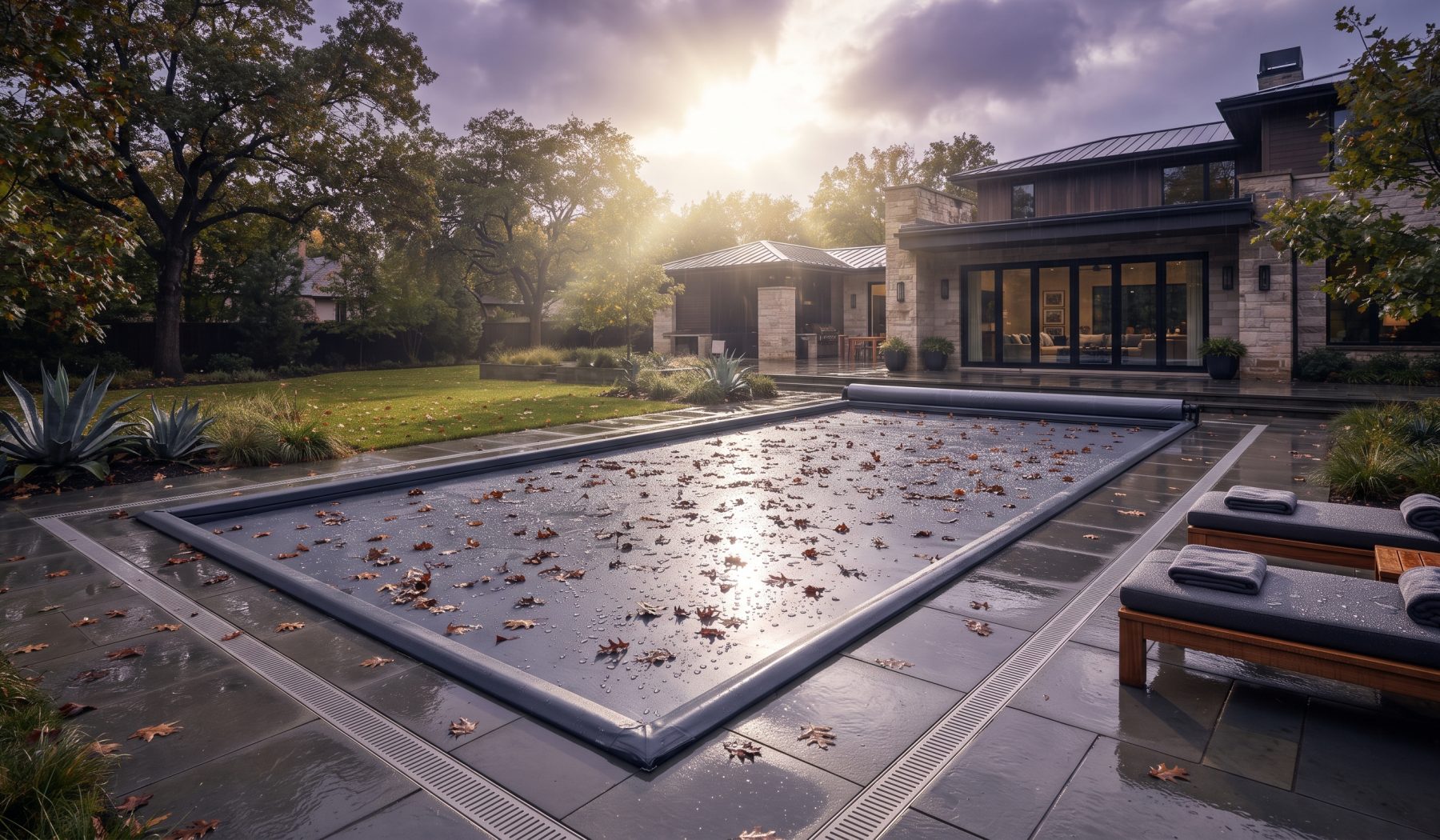
A reliable pool closing checklist protects three things at once: the water, the plumbing and the equipment. The exact procedure depends on climate, pool construction and manufacturer instructions, but the order matters. Clean and balance the pool first, then isolate and winterize each component before installing the cover.
Editorial and safety note: This is a planning guide, not a substitute for the manuals for your pump, filter, heater, salt system, automation equipment or cover. Plumbing layouts differ, and trapped water can cause expensive freeze damage. Never mix pool chemicals, never add water to a pool chemical and never combine different chlorine products.
Pool closing checklist at a glance
| Step | What to do | Why it matters |
|---|---|---|
| 1 | Choose the right closing window | Closing too early can encourage algae; waiting for a freeze risks equipment |
| 2 | Inspect and document the system | Photos and labels simplify spring reopening |
| 3 | Remove leaves and debris | Organic material consumes sanitizer and stains surfaces |
| 4 | Test and balance the water | Reduces corrosion, scale and spring cleanup |
| 5 | Clean the filter | Prevents dirty media from sitting all winter |
| 6 | Remove accessories | Protects cleaners, ladders and removable fittings |
| 7 | Adjust the water level correctly | Protects the skimmer and matches the cover type |
| 8 | Drain or blow out plumbing | Prevents trapped water from freezing in lines |
| 9 | Winterize equipment | Protects pumps, filters, heaters and sanitizers |
| 10 | Plug and protect openings | Keeps water from re-entering cleared lines |
| 11 | Install the cover | Controls debris and limits unsafe access |
| 12 | Monitor through winter | Catches cover, water-level and drainage problems early |
1. Choose the right time to close
Pentair recommends full winterization in regions that regularly experience snow, sleet or temperatures around or below 32°F (0°C). The calendar date is less important than local conditions. Close before sustained freezing weather, but avoid sealing a warm, poorly sanitized pool weeks too early.
In a mild climate, a partial closure may be more appropriate. If circulation will continue, the pool still needs routine water testing and a freeze-response plan.
2. Inspect and document before disassembly
Run the system and look for leaks, unusual pump noise, air in the return lines and damaged valves. Record the filter pressure when the system is clean. Photograph valve positions, unions, drain plugs, automation settings and removable fittings before changing anything.
3. Clean the pool completely
Skim the surface, empty baskets, brush the walls and steps and vacuum the floor. Remove twigs and oversized debris manually before running a robotic cleaner. A robot is useful for the final pass, but it should not be stored in the pool for winter.
If autumn leaves are the main problem, compare cleaners by basket capacity and filtration in our robotic pool cleaner guide.
4. Test and balance the water
Test sanitizer, pH, total alkalinity, calcium hardness and stabilizer with a method appropriate for dosing decisions. Our test strips vs. liquid test kits guide explains why a complete drop kit is generally the better primary tool when a result determines a chemical dose.
Use the target ranges provided by the pool-surface, equipment and chemical manufacturers. Do not copy a generic dose without knowing the pool volume and current result. The CDC advises reading product labels, wearing the specified protective equipment and keeping different pool chemicals separate.
5. Clean the filter before shutdown
Backwash a sand or D.E. filter only when the manufacturer directs it, and clean cartridges without damaging the pleats. After cleaning, follow the filter manual for draining and valve position.
6. Remove accessories and portable equipment
- Remove the robotic cleaner, rinse its filter and store it dry according to its manual.
- Remove ladders, removable rails, toys, floats and cleaning tools.
- Disconnect removable return fittings, fountains and over-the-wall equipment when required.
- Store sensors, solar blankets and portable thermometers within their rated temperature range.
- Clean the deck so leaves and dirt are not swept under the cover.
7. Set the water level for the pool and cover
Do not assume every pool should be drained below the skimmer. Water level depends on the skimmer-protection method, liner or surface, groundwater risk and cover design. Some covers rely on the pool water for support; excessive lowering can damage the cover or pool.
Follow the pool builder’s and cover manufacturer’s instructions. Never drain a vinyl-lined, fiberglass or in-ground pool completely without professional direction.
8. Clear freeze-prone plumbing
This is the highest-consequence step. The objective is to remove water from lines that can freeze, then prevent water from returning. Improvised high pressure can damage fittings or create a projectile hazard. If you cannot identify every line, valve and low point, use a qualified pool professional.
9. Winterize each equipment component
Pump
Switch off power using the approved disconnect, remove the drain plugs specified by the manual and protect the housing from standing water.
Filter
Drain the tank and connected hardware completely. Leave the multiport or air-relief components in the prescribed winter position.
Heater and heat pump
Follow the exact winterizing procedure for the model. Heat exchangers and internal piping can retain water even when the visible plumbing looks empty.
Salt chlorine generator and chemical feeders
Turn off and isolate feed equipment before service. Remove and store cells or sensors only if the manual directs it.
Automation and sensors
Save schedules and note freeze-protection settings before shutdown. Remove vulnerable probes according to their storage instructions.
10. Plug, protect and verify
Install the correct winter plugs, skimmer protection and expansion devices only after the associated lines are cleared. Confirm that plugs are seated without damaging threads or gaskets.
11. Install the pool cover correctly
Inspect the cover, anchors, straps, springs and attachment points before installation. A safety cover must be installed and tensioned according to its manufacturer. A cover is not a substitute for barriers, supervision or a self-closing, self-latching gate.
12. Check the pool through winter
After storms and temperature swings:
- remove excessive leaves and approved amounts of surface water from the cover;
- check straps, anchors and edges;
- verify that the pool water remains within the cover manufacturer’s permitted range;
- keep deck drains and equipment-pad drainage clear;
- look for displaced plugs, cracked housings or animal damage.
Common pool-closing mistakes
- Closing dirty water: debris and poor chemistry create a harder spring opening.
- Guessing chemical doses: test first and follow the product label.
- Lowering the water too far: the correct level depends on the pool and cover.
- Missing one plumbing branch: a spa, cleaner, feature or heater loop can retain water.
- Using excessive air pressure: incorrect equipment can damage plumbing or cause injury.
- Ignoring the pool until spring: winter storms can change the cover and water level.
Frequently asked questions
At what temperature should you close a pool?
Use local freeze risk and water temperature rather than a universal calendar date. Regions with sustained temperatures at or below 32°F (0°C) require freeze protection.
Do you have to lower the water below the skimmer?
Not for every pool or closing system. The correct level depends on skimmer protection, pool construction, groundwater and cover requirements.
Should pool chemicals be added before closing?
Test and balance the water first, then follow each product label and allow any required circulation time. Never mix products.
Can you leave a robotic pool cleaner in the pool all winter?
No. Remove it after the final cleaning cycle, rinse and dry the filter and store the unit according to the manufacturer’s instructions.
Can an owner blow out pool lines without a professional?
Only when the owner understands the complete plumbing layout and has equipment appropriate for that system. Professional winterization is safer when the layout is uncertain.
Final pre-cover check
Before walking away, confirm that the water is clean and balanced, every freeze-prone circuit has been addressed, each equipment manual’s instructions were followed, accessories are stored, the cover is secure and the final valve and plug positions are documented.
Related guides: Compare pool testing methods, diagnose cloudy water after rain and choose a robotic cleaner for seasonal debris.